




CMMS and Visual Planning
Optimize Maintenance Management
and Scheduling
Your CMMS manages equipment data. Visual Planning coordinates the teams that act on it.
Visual Planning complements your Computerized Maintenance Management System (CMMS) by adding the resource scheduling and team coordination layer most CMMS platforms were not built to provide. Centralize your work orders, improve equipment visibility, and schedule your maintenance teams efficiently.
The Challenges Maintenance Organizations Face
Maintenance management often faces a number of challenges:
Lack of visibility
No clear view of active interventions, team availability, and operational priorities in one place.
Complex scheduling
Coordinating teams, equipment, and time slots across multiple sites becomes unmanageable without a centralized tool.
Unplanned breakdowns
Equipment failures disrupt operations and throw schedules into chaos without warning.
Disconnected tools
Maintenance data lives across multiple systems with no unified operational view.
Limited performance oversight
Performance tracking lacks the precision and real-time visibility needed to drive improvement.
Rising maintenance costs
Unplanned events and delays drive up maintenance costs in ways that are hard to control or predict.
What Is a CMMS?
A Computerized Maintenance Management System (CMMS) is software that centralizes and optimizes all maintenance activities across an organization.
A CMMS manages:
- Equipment and physical assets
- Work orders and intervention tracking
- Preventive and corrective maintenance schedules
- Spare parts inventory
- Performance indicators and maintenance KPIs

Goal: improve equipment reliability and reduce total maintenance costs.
The Three Types of Maintenance
Our training sessions are led by the consultants who helped implement your solution.
They can be conducted remotely or in person.
Corrective Maintenance
Corrective maintenance covers interventions performed after a breakdown or malfunction to restore equipment to operational status. It can be emergency-driven when downtime directly impacts production, or planned when conditions allow.
While essential, over-reliance on corrective maintenance leads to unplanned downtime, team disruption, and rising costs. A CMMS tracks incidents, analyzes recurrence patterns, and identifies corrective actions to reduce these situations over time.
Predictive Maintenance
Predictive maintenance anticipates failures before they occur by analyzing data from equipment — utilization indicators, intervention history, and sensors that detect early signs of degradation.
This approach lets teams intervene at the right moment — avoiding both critical failures and unnecessary operations — improving equipment availability and optimizing maintenance costs.
Preventive Maintenance
Preventive maintenance covers planned interventions designed to reduce the risk of equipment failure. Schedules are based on time, usage levels, or manufacturer recommendations.
Structuring these interventions in a CMMS connected to Visual Planning lets organizations anticipate workload, improve team organization, and deliver more reliable, controlled maintenance programs.
Connect Visual Planning to Your Existing CMMS
Visual Planning connects to your CMMS to automate data exchange and eliminate manual coordination between systems.
Compatible with: SAP PM · IBM Maximo · Infor EAM · Mainta · Sage · Divalto · Business systems
Through APIs and native connectors, you can:
✓ Automatically import work orders from your CMMS
✓ Synchronize data between systems in real time
✓ Automatically schedule interventions based on team availability
✓ Eliminate duplicate data entry between tools

Key CMMS Capabilities With Visual Planning
with Visual Planning
Centralize your data, schedule your work orders, and optimize your resources with a CMMS integrated with Visual Planning
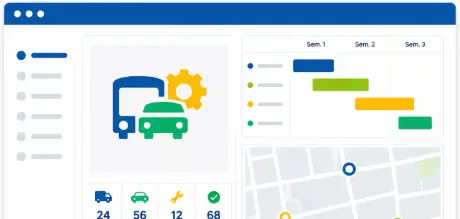
Equipment Management
Centralize asset data and full intervention history for every piece of equipment in your operation.
>
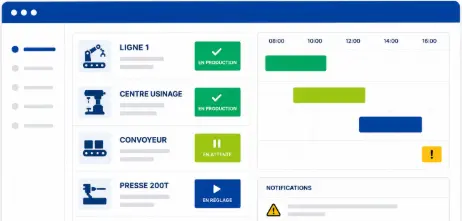
Work Order Management
Create, schedule, and track work orders from a centralized scheduling environment connected to your CMMS.
>
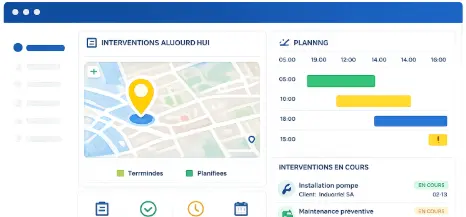
Maintenance Planning
Organize interventions based on team availability, required skills, and operational priorities.
>

Performance Tracking
Analyze your key maintenance indicators — MTBF, MTTR, and equipment availability rates.
>

Spare Parts Management
Track parts inventory and anticipate restocking needs before shortages disrupt planned maintenance.
>
What You Need to Succeed With a CMMS Implementation
A successful CMMS deployment requires organizational preparation before go-live to guarantee effectiveness and adoption.
- Effective collaboration between maintenance, IT, and management teams to align objectives and support deployment
- Reliable, structured data with an accurate equipment inventory and complete asset information
- Clearly defined processes covering intervention types, priority levels, and validation workflows
- Team involvement with trained, supported users to ensure lasting adoption across the organization

Why Visual Planning Complements Your CMMS
- Global Operational Visibility
Access a real-time view of your teams, their availability, and their assignments across every site and facility.
- Resource Optimization
Assign the right technician to the right work order based on skills, availability, and location.
- Better Team Coordination
Improve communication between field teams and scheduling managers. Reduce errors caused by manual coordination.
- Integration With Your Existing Systems
Connect your CMMS, ERP, and business tools to centralize and synchronize maintenance data across your organization.
CMMS and Visual Planning
Frequently Asked Questions
Is Visual Planning a CMMS?
No. Visual Planning is not a CMMS. It is a resource scheduling platform that complements a CMMS by optimizing intervention scheduling, resource coordination, and team visibility. The two tools are complementary and integrate via REST API — your CMMS manages equipment data and work orders, Visual Planning coordinates the teams that execute them.
Why connect Visual Planning to a CMMS?
A CMMS centralizes equipment data and work orders. Visual Planning adds the scheduling and team coordination layer most CMMS platforms do not provide. Together, they give maintenance managers a complete view of operations, team availability, and intervention status in real time.
What are the benefits of connecting a CMMS to Visual Planning?
The combination reduces unplanned downtime through better preventive planning, optimizes technical team utilization, lowers maintenance costs, and improves intervention traceability for audits and compliance reporting.
Can Visual Planning automate intervention scheduling?
Yes. Visual Planning automatically imports work orders from your CMMS and schedules interventions based on team availability, required skills, and operational priorities — without manual re-entry between systems.
Can Visual Planning integrate with an existing CMMS?
Yes. Visual Planning has native connectors for SAP PM, IBM Maximo, Infor EAM, Mainta, Sage, Divalto, and other leading CMMS platforms. Integration is bidirectional via REST API — data flows automatically between systems with no duplicate entry.
What types of maintenance can be managed with a CMMS and Visual Planning?
The combination covers all three maintenance types: corrective (post-breakdown interventions), preventive (calendar-based planned interventions), and predictive (data-driven interventions based on equipment condition analysis). Visual Planning optimizes team scheduling and coordination for every maintenance type.
Disorganized Maintenance Costs More Than You Think. Start Running It Properly.
Visual Planning complements your CMMS with the resource scheduling and field visibility your maintenance teams need — to intervene at the right time, with the right people, every time.